 Image 1 of 2
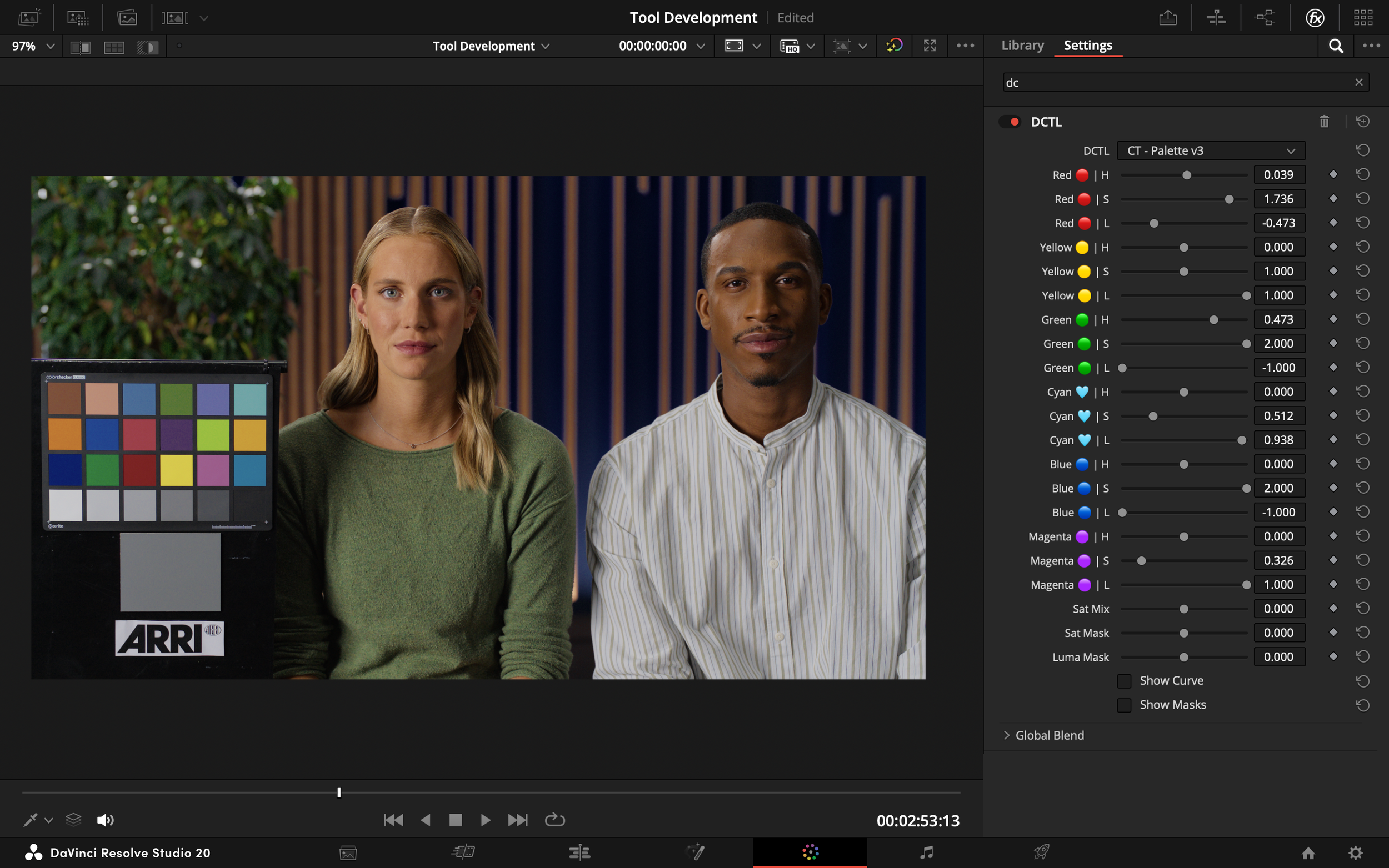 Image 2 of 2
-
Red 🔴 | H: Shifts red hues. Magenta ← 0 → Yellow
Red 🔴 | S: Saturation control for red hues.
Red 🔴 | L: Luminance adjustment for red hues.
Yellow 🟡 | H: Shifts yellow hues. Red ← 0 → Green
Yellow 🟡 | S: Saturation control for yellow hues.
Yellow 🟡 | L: Luminance adjustment for yellow hues.
Green 🟢 | H: Shifts green hues. Yellow ← 0 → Cyan
Green 🟢 | S: Saturation control for green hues.
Green 🟢 | L: Luminance adjustment for green hues.
Cyan 🩵 | H: Shifts cyan hues. Green ← 0 → Blue
Cyan 🩵 | S: Saturation control for cyan hues.
Cyan 🩵 | L: Luminance adjustment for cyan hues.
Blue 🔵 | H: Shifts blue hues. Cyan ← 0 → Magenta
Blue 🔵 | S : Saturation control for blue hues.
Blue 🔵 | L: Luminance adjustment for blue hues.
Magenta 🟣 | H: Shifts magenta hues. Blue ← 0 → Red
Magenta 🟣 | S: Saturation control for magenta hues.
Magenta 🟣 | L: Luminance adjustment for magenta hues.
Sat Mix: Controls the blend of saturation types.
Sat Mask: Modulates the effect in either low sat or high sat regions.
Luma Mask: Limits the effect to shadows or highlights.
Show Curve: Overlays the adjustment curve on the image.
Show Masks: Shows the selected matte over a checkerboard to visualise the affected area.
-
Whilst I made and tested this tool within a DaVinci Wide Gamut Intermediate pipeline, there’s nothing within the coding that forces it to be used in any particular colour space—since it simply shifts from RGB (which your images are in natively) to another colour model, applies the adjustments, and then returns back to RGB.